

Sheikh Hamdan unveils sweeping plan to merge Dubai services into single digital ecosystem
Dh10 billion economic boost projected from advanced digital initiatives

DUBAI – Dubai has entered a decisive phase in its digital transformation journey, with a directive that will reshape how residents, businesses, and government entities interact.
The emirate is moving towards a unified, intelligent system where services are streamlined, data is interconnected, and artificial intelligence plays a central role in governance. The latest announcement signals a shift from digital adoption to full-scale digital integration, positioning Dubai as a global benchmark in smart city development.
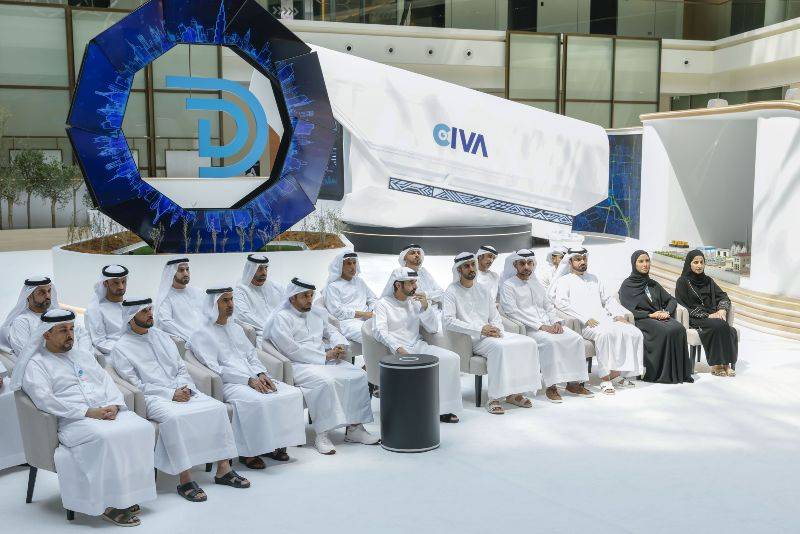
During a visit to Digital Dubai, His Highness Sheikh Hamdan bin Mohammed bin Rashid Al Maktoum outlined a clear and ambitious mandate: all government services for individuals and businesses must be integrated into a single digital ecosystem within one year.
During my visit to Digital Dubai, I directed the integration of all digital services for individuals and businesses into unified platforms within one year, tasking Digital Dubai with coordinating implementation across entities. I also launched strategic digital projects to… pic.twitter.com/jg5MvcK9Sc
— Hamdan bin Mohammed (@HamdanMohammed) April 1, 2026
The move is expected to eliminate fragmented platforms, reduce administrative complexity, and significantly enhance service delivery across the emirate.
Unified systems
At the core of the directive is the creation of a seamless digital environment where government entities operate as one interconnected network. Instead of navigating multiple platforms, users will access services through streamlined and specialised digital channels designed to reduce time, effort, and duplication.
Digital Dubai has been tasked with overseeing the implementation, coordinating closely with all government entities to ensure full integration. The initiative reflects a broader governance philosophy centred on efficiency, responsiveness, and user-centric service delivery.
Officials emphasised that the transformation is not limited to technological upgrades. It represents a structural shift in how government services are designed and delivered, with integration and collaboration replacing siloed operations. The aim is to create a system that anticipates user needs, delivers proactive services, and ensures consistency across all touchpoints.
AI governance
A defining feature of the new model is the adoption of artificial intelligence as a foundational element of governance. Dubai is advancing towards a system where government performance is entirely data-driven, supported by advanced analytics and AI-powered infrastructure.
The initiative includes the development of an extensive algorithm bank containing production-ready machine learning models. These models are designed to meet strict standards of quality, scalability, and consistency, enabling entities to deploy AI solutions efficiently across various sectors.
In parallel, secure and scalable sandbox environments are being introduced to allow government entities to develop and test AI applications. These controlled environments ensure compliance with data privacy regulations while fostering innovation and experimentation.
The long-term objective is to ensure that at least 80 per cent of government policies and strategies are informed by AI-supported data. At the same time, efforts are underway to enhance the capabilities of government leaders, with a focus on strengthening their expertise in artificial intelligence and advanced analytics.
Data economy
Data lies at the centre of Dubai’s digital transformation strategy, evolving from a supporting tool into a critical economic asset. Projects developed by the Dubai Data and Statistics Establishment aim to transform vast datasets into actionable knowledge and measurable economic value.
These initiatives integrate open data with intelligent analytics powered by generative AI, enabling rapid and seamless access to information. As more government entities join the ecosystem, the platform is expected to grow into the primary destination for city data, serving policymakers, businesses, and researchers alike.
The economic impact of this transformation is significant. The projects are projected to contribute more than Dh10 billion to Dubai’s GDP within two years of operation. In addition, the emirate aims to secure a position among the world’s top 10 cities in the Government AI Readiness Index.
Officials highlighted that data integration is already unlocking new sources of economic value, improving productivity across sectors, and enabling more accurate forecasting of future opportunities. The approach aligns closely with the objectives of the Dubai Economic Agenda D33, which prioritises innovation, competitiveness, and sustainable growth.
Smart operations
The transformation extends beyond digital services into the operational backbone of government functions. The second generation of Government Resource Planning Systems is being introduced to unify and enhance key administrative processes.
This comprehensive system upgrade covers finance, human resources, payroll, procurement, contracts, asset management, and maintenance. By integrating these functions into a single ecosystem, the initiative aims to improve efficiency, streamline workflows, and support more informed decision-making.
The adoption of emerging technologies, particularly artificial intelligence, is expected to further enhance operational flexibility. The system will enable real-time insights into resource allocation, financial performance, and organisational efficiency, allowing government entities to respond more effectively to evolving needs.
Officials noted that integration, rather than technology alone, is the foundation of future government readiness. By prioritising unified policies and platforms, Dubai is building a model where innovation is driven by coherence and collaboration.
Future city
Dubai’s vision of a digital city extends into real-time urban management, powered by advanced infrastructure and intelligent systems. Projects reviewed during the visit demonstrate how data and AI are being used to analyse urban patterns, monitor city performance, and enhance quality of life.
The systems process multiple streams of data, including visual inputs, in real time. This enables authorities to generate actionable insights for a range of applications, from improving traffic flow to managing emergency responses in public facilities.
A key component of this ecosystem is the integration of Internet of Things technologies. Smart sensing systems deployed across the city can detect unusual events such as smoke or fires and instantly alert relevant authorities, including Civil Defence. This capability enhances safety, preparedness, and response times, reinforcing Dubai’s reputation as a secure and resilient city.
In addition, the introduction of agentic AI solutions marks a significant step forward in user interaction. These systems allow individuals and businesses to engage directly with AI agents through natural language interfaces, enabling them to request and complete government services seamlessly. The AI agents are capable of understanding user needs and independently executing tasks, reducing the need for manual intervention.
The broader ambition is to create a city where technology operates invisibly in the background, simplifying everyday life while ensuring high standards of safety, efficiency, and convenience. Digital transformation is positioned not only as a tool for improvement but as a defining feature of Dubai’s identity as a global hub for innovation and investment.
The initiatives collectively aim to contribute Dh100 billion annually to Dubai’s economy, underscoring the scale of the emirate’s digital ambitions.